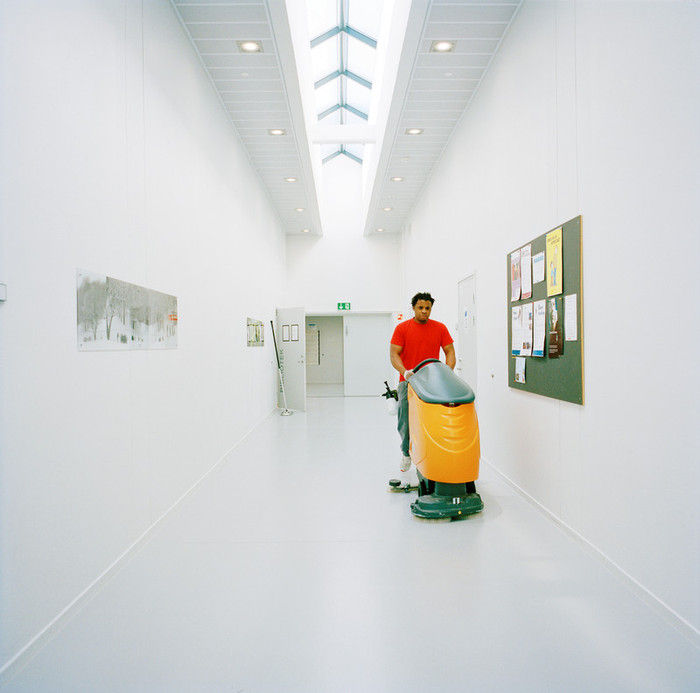
How does spatial design effect us?
Understanding how people react to their surroundings could shine a light on to why people reoffend. The affect of colour and light in our environment can impact us significantly, from both a psychological and physiological standpoint. 80 percent of information humans take in is from the environment, therefore our manmade environments must be approached in a versatile manner in order to achieve their real purpose. This involves corresponding the function of a building in the design and aesthetics in order to create optimum conditions that safeguard the mental and physical well-being of the user (MAHNKE, 1996).
“With every particular architectural product, it is the spontaneous emotional reaction that is of importance to us“(LINDSTOM 1987). The environment we surround ourselves with generates an emotional response within us and in turn, has a connection to psychosomatics. This is a physical illness or a condition originated or aggravated by a psychological factors, such as internal conflict or stress. Our body’s defence system can be strengthened by a positive emotional mood, whereas negative emotions can have the reverse affect. Stress is known to cause headaches and anxiety, and over an extended period of time cause high blood pressure, migraines, heart palpitations and eczema to name a few (ARCHINECT, 2012).
Today we have a better understanding of how artificial and natural light affect us. Since the 1940’s, fluorescent light has been used on a large scale as an alternative to natural light. Sunlight is fundamental for the health and growth of tliving things, including humans. Although artificial light is an efficient substitute as a visual replacement, it cannot replace the psychological and physiological impact that natural light gives us. Therefore, it seems logical question what effect artificial light may have of life, including that of a human (NIKKEN, PAGE 26-27)
Dr John Ott carried out research that involved exposing plants to different types of light, and with intriguing results he took the experimenting to the next level. In a study, he exposed mice to light closer to the red end of the colour spectrum. The mice had a strong inclination towards behavioural issues such as irritation, aggressiveness and cannibalism. There was also an increase in tumour development and mass calcium deposits within the heart tissue. A similar study whereby the mice were left under the same type of lighting for 6 months also recorded significant hair loss and damaged skin. Ott also found that chickens that live under artificial lights have a drastic disadvantage to those who live in natural light. They lived half as long, were more aggressive, and on inspection of their eggs, they had significantly higher cholesterol. Additionally, when testing children in classrooms illuminated with full-spectrum light he found that within a month, they demonstrated an improvement in academic achievements and significantly less hyperactivity. Full spectrum lights were also beneficial to children who had Attention Deficit Disorders and poor academic performance, and it also reduced childhood tooth decay.
Based on Otts experimental results, he speculated that similar responses could happen in humans. The pituitary gland controls several other hormone glands in our bodies, including the adrenals and thyroid, ovaries and testicles. If it could respond to different types of light energy, then light energy would be a very important factor in our environments as it would have an effect on the physical and psychological well-being (MOTHER AND PUBLICATIONS, 1986).
Consistent noise levels can also have a profound effect on well-being, even if the person is not particularly consciously disturbed. Although the exact role that the noise exposure plays in ill-health is not well understood yet; however studies carried out by researchers at Imperial College London and Kings College London found that people living in noisier, built up areas had a greater risk of developing a cardiovascular disease. Researchers estimated round 72,000 residents living in noisiest areas had a 12-20 percent higher risk that people living in the quietest areas. Short-term peaks in blood pressure can be caused by loud noises; however, being exposed to this level of noise for long periods of time, including through the night can inflict a higher risk of poorer health and sleep deprivation. Sleep deprivation is known to have a number of adverse effects on health. This includes rising stress levels and blood pressure (BLOCH, 2012).
noise
Artificial light versus
Natural light
Environment
Background Halden Prison: Fig 2